

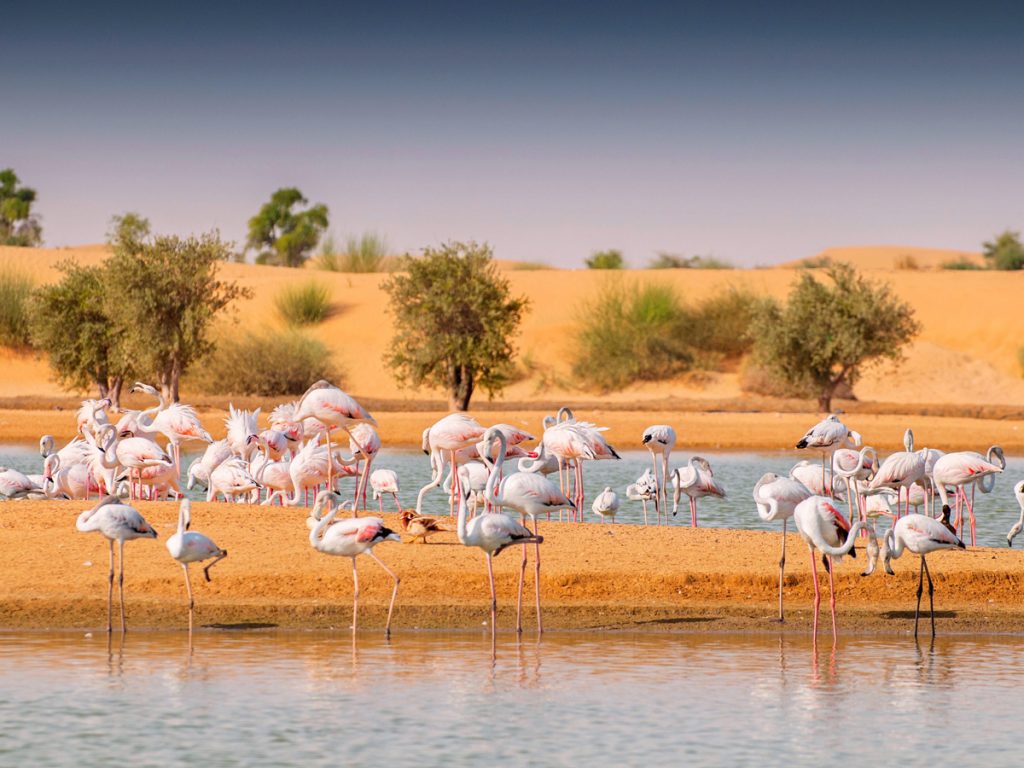
Envision spotting a flock of Greater Flamingos at Ras Al Khor Wildlife Sanctuary during spring migration; this could be your next birdwatching highlight in Dubai. The city boasts key hotspots like Ras Al Khor and Al Qudra Lakes, where millions of migratory birds pass through or settle. These sites offer accessible, well-maintained viewing areas and are free or low-cost, making Dubai a prime location for bird lovers enthusiastic to observe diverse species and seasonal movements.
Dubai as a Migratory Highway
Dubai serves as a pivotal stopover for migratory birds on their long journeys between continents, significantly impacting global migratory patterns. Its unique geographic location at the intersection of Europe, Asia, and Africa places it along the Rift Valley/Black Sea flyway, a crucial migration route for avian species.
Each year, approximately two million birds traverse Dubai, including a diverse array of waders, raptors, and seabirds. The city’s varied ecosystems—ranging from coastal mudflats and deserts to mangroves and wetlands—offer vital resting and feeding grounds. Notable sites such as the Ras Al Khor Wildlife Sanctuary and Al Qudra Lakes provide essential protection for these birds, allowing them to thrive during peak migration seasons in spring (March-May) and autumn (September-November).
Birdwatchers and biologists alike benefit from Dubai’s strategic positioning and protected areas. As migratory patterns evolve due to climate change, Dubai’s role as a sanctuary for these species becomes increasingly critical. Future conservation efforts and urban planning will play a significant role in ensuring that Dubai remains an essential haven for migratory birds, fostering biodiversity and ecological balance in the region.
Pre-Visit Essentials
Before heading out birdwatching in Dubai, ensure you have the right gear and knowledge of peak seasons for an optimal experience.
Key Birdwatching Gear
Birdwatching in Dubai requires careful preparation and the right equipment to ensure a fulfilling experience. This guide offers essential insights into the gear needed for observing the city’s diverse avian life.
First, quality binoculars are indispensable for spotting birds from a distance. Opt for models like 8×42 or 10×42, which provide excellent clarity across Dubai’s unique habitats, from wetlands at Ras Al Khor to the arid deserts. Investing in a reliable spotting scope with a tripod further enhances your ability to observe waterfowl and waders in detail, particularly at key locations.
Moreover, an authoritative field guide such as “Birds of the Middle East” (2024) is crucial for on-the-spot species identification. Complement this with the “Birds of the Middle East” mobile app for real-time identification and data logging, making your birdwatching experience both educational and engaging.
Don’t overlook personal comfort and safety. A wide-brimmed hat, high-SPF sunscreen, and a reusable water bottle are essential to protect against the sun while exploring Dubai’s natural surroundings. With the right gear, birdwatchers can maximize their enjoyment and discovery in this vibrant ecosystem.
Best Seasons for Birdwatching
Peak birdwatching in Dubai occurs during the prime migratory seasons of spring and autumn, specifically from March to May and September to November. During these months, millions of birds traverse the flyway, making it an opportune time for enthusiasts to witness a diverse array of species at renowned hotspots like Ras Al Khor Wildlife Sanctuary and Al Qudra Lakes.
Spring and autumn are characterized by the arrival and departure of migratory birds, with Ras Al Khor hosting over 450 species, including flamingos and various shorebirds. Al Qudra Lakes, with its artificial wetlands, attracts both migratory and resident species, making it a must-visit for birdwatchers. Birdwatching in winter, from December to February, also provides excellent opportunities, as many birds remain in the area to escape colder climates elsewhere.
Conversely, summer (June to August) presents challenges for birdwatching due to intense heat, which significantly reduces avian activity. To enhance your chances of sightings, plan visits during early mornings or late afternoons when birds are most active. Additionally, be mindful of the specific opening hours of protected areas, such as Ras Al Khor, to maximize your birdwatching experience.
As Dubai continues to develop its eco-tourism initiatives, the city’s commitment to protecting its natural habitats ensures that birdwatching will remain a vibrant and rewarding pursuit for both residents and visitors alike.
Top Birdwatching Hotspots in Dubai
Dubai boasts several prime birdwatching spots that attract diverse species year-round. Key locations include Ras Al Khor Wildlife Sanctuary and Al Qudra Lakes, along with urban parks offering accessible viewing opportunities.
Ras Al Khor Wildlife Sanctuary
Ras Al Khor Wildlife Sanctuary, located just outside Dubai’s bustling city center, is a vital protected area offering an unparalleled opportunity to observe an array of bird species in their natural habitat.
This sanctuary stands out for its remarkable population of Greater Flamingos, which can be seen year-round, making it a key attraction for both residents and tourists. The sanctuary is easily accessible via Oud Metha Road and is free to enter, typically open from early morning until late afternoon. Visitors can explore the sanctuary through two main bird hides, each providing unique perspectives of the wetland ecosystem.
In addition to the iconic flamingos, birdwatchers can spot Greater Spotted Eagles during the winter months, Western Reef Herons, and Socotra Cormorants. The sanctuary is meticulously managed by Dubai’s Environment Agency, ensuring the preservation of its rich biodiversity. Visitors are encouraged to respect the wildlife by adhering to designated paths and minimizing disturbances.
As urban development continues to expand in Dubai, the sanctuary serves as a crucial reminder of the importance of biodiversity and conservation efforts. Engaging with this unique ecosystem not only enriches the community’s connection to nature but also highlights the need to protect such vital habitats for future generations.
Al Qudra Lakes (in Dubai Desert Conservation Reserve)
Al Qudra Lakes, located within the Dubai Desert Conservation Reserve, is an essential oasis for birdwatching enthusiasts just a short drive from Dubai’s bustling city center. These man-made lakes, situated approximately 50 kilometers from downtown Dubai, offer a unique opportunity to observe a diverse array of avian species, particularly during migration seasons.
The lakes attract both desert-adapted birds and waterfowl, including Cream-coloured Coursers, Hoopoe Larks, Greater Flamingos, Glossy Ibis, and Northern Shovelers. Accessing Al Qudra Lakes is straightforward, with ample parking available for visitors arriving by car. For those seeking a more adventurous experience, exploring the area by bike or 4×4 vehicle is recommended, especially for deeper tracks.
While entrance to the lakes is free, local guides can significantly enhance the birdwatching experience by directing visitors to prime spotting locations. The Dubai Desert Conservation Reserve, managed by the Dubai Conservation Team, emphasizes the importance of preserving the natural habitats while allowing for ecotourism opportunities.
As urban development continues in Dubai, engaging with natural attractions like Al Qudra Lakes is vital for fostering a connection with the environment. Future initiatives may further enhance accessibility and conservation efforts, ensuring this oasis remains a haven for both wildlife and residents alike.
Mangrove Wetlands (e.g., Jebel Ali, Khor Kalba)
Mangrove wetlands in Dubai, particularly at Jebel Ali and Khor Kalba, are essential habitats for a diverse array of wildlife and provide excellent birdwatching opportunities. These ecosystems serve as critical resting and feeding grounds for both migratory and resident birds, attracting enthusiasts eager to explore their rich biodiversity.
Jebel Ali’s protected mangroves and the Khor Kalba Eco-reserve are among the premier locations for birdwatching. Visitors can engage in guided kayak tours or traverse well-maintained walking trails to observe species such as the White-collared Kingfisher, various herons, and migratory songbirds. These experiences are supported by local environmental authorities, ensuring that enthusiasts engage with nature responsibly.
Conservation efforts in these areas are paramount, with regulations in place to protect wildlife from disturbance. Visitors are encouraged to maintain a respectful distance from the animals, fostering a sustainable relationship with the environment. The Dubai Environment and Protected Areas Authority oversees these initiatives, emphasizing the importance of preserving such vital ecosystems.
Access to these natural sites is often free or accompanied by minimal fees, allowing for greater public engagement. Designated viewing areas and guided tours enhance the observation experience, making birdwatching both educational and enjoyable. In this way, Dubai’s mangrove wetlands not only offer a glimpse into the region’s natural beauty but also play a critical role in environmental stewardship.
Safa Park / Mushrif Park
Safa Park and Mushrif Park offer prime birdwatching opportunities in Dubai. These urban parks attract a variety of migratory birds during spring and autumn, providing accessible viewing for enthusiasts of all levels.
Safa Park, located near the heart of the city, features tranquil ponds and lush green spaces that attract species such as warblers, flycatchers, and sparrows. The park’s AED 5 entry fee allows visitors to enjoy its amenities, including benches and shaded areas, making it suitable for families and beginners alike. Birdwatchers can maximize their experience by visiting early in the morning when bird activity peaks.
Mushrif Park, with a slightly higher entry fee of AED 10, boasts expansive open areas and mature trees that host diverse species like bulbuls, shrikes, and wheatears. The park is particularly popular in the late afternoon, offering a vibrant atmosphere for spotting birds. Both parks provide year-round facilities that enhance the birdwatching experience.
As urban development continues in Dubai, the importance of preserving green spaces like Safa Park and Mushrif Park becomes increasingly vital. These parks not only serve as crucial habitats for migratory birds but also foster community engagement through nature appreciation.
Notable Migratory & Resident Species to Spot
Dubai’s diverse ecosystem offers an exceptional opportunity for birdwatching enthusiasts, featuring both migratory and resident species that can be observed throughout the year. This guide highlights four notable species that exemplify the city’s rich avian diversity.
The Greater Flamingo stands out as Dubai’s most iconic bird, often spotted in impressive flocks at locations such as Ras Al Khor Wildlife Sanctuary and Al Qudra Lakes. These vibrant pink birds thrive in the city’s wetlands, making them a must-see for visitors and residents alike.
Another remarkable species is the Socotra Cormorant, a large seabird that frequents Dubai’s coastal waters and wetlands. These birds are known for their unique appearance and can often be seen roosting along the shores, particularly in areas managed by the Dubai Municipality, which emphasizes the conservation of local wildlife.
The Western Reef Heron is an elegant bird that gracefully navigates the mangroves and coastlines of Dubai. Known for its patient hunting style, this heron can be observed in areas such as Jumeirah Beach, showcasing the city’s commitment to preserving its natural habitats.
Lastly, the Steppe Eagle is a powerful raptor that migrates through Dubai during the winter months. Birdwatchers can spot these majestic birds perched on mounds or soaring in the skies, particularly in the Al Marmoom Desert Conservation Reserve, which supports diverse wildlife.
Dubai’s exceptional avian diversity makes it a prime destination for birdwatchers. As conservation efforts continue to flourish, the future for these species looks promising, encouraging both residents and tourists to engage with Dubai’s unique natural heritage.
Desert Specialists
Dubai’s desert habitat is home to a wealth of unique bird species, renowned for their remarkable adaptations to arid conditions. This definitive guide highlights the distinct behaviors and habitats of these desert specialists, offering invaluable insights for birdwatchers and nature enthusiasts alike.
Birds like the Hoopoe Lark, Cream-coloured Courser, and Desert Wheatear exemplify the resilience of avian life in Dubai’s challenging landscape. Observers can find these species thriving in locations such as the Al Marmoom Desert Conservation Reserve, a vital area for conservation efforts, and the outskirts of the city. These birds are often spotted engaging in specialized behaviors, such as the Hoopoe Lark’s striking aerial displays or the Courser’s swift movements across the sandy terrain.
Discover Dubai’s desert birds like the Hoopoe Lark and Cream-colored Courser at Al Marmoom Reserve.
To witness these elusive birds, plan visits during early mornings or late afternoons when they are most active. Equip yourself with binoculars and practice patience, as spotting these species requires keen observation skills. Familiarizing yourself with their distinct calls and behaviors will enhance your identification efforts in the expansive desert environment.
As Dubai continues to develop, the preservation of these unique habitats becomes increasingly crucial. Engaging with local wildlife conservation initiatives not only supports the ecosystem but also enriches the experience of exploring Dubai’s remarkable natural heritage.
Local Birding Groups & Tours
Joining local birding groups and guided tours in Dubai significantly enhances the birdwatching experience. These organized activities provide invaluable access to expert knowledge and prime birding locations, making them essential for both novices and seasoned birdwatchers.
Local birding groups, such as the Emirates Bird Record Committee and Dubai Birdwatching Club, offer expert guidance from seasoned ornithologists. These knowledgeable guides help enthusiasts identify both rare and common species while sharing insights into their behaviors and habitats. Participants gain a deeper understanding of the regional avifauna, enriching their overall experience.
Tours often access prime locations like Ras Al Khor Wildlife Sanctuary and Al Qudra Lakes, which are vital for birdwatching. Many of these excursions operate outside of standard hours, allowing birders to view species that may otherwise be missed. This access is crucial for observing migratory patterns and seasonal residents.
Networking opportunities abound within these groups. Birdwatchers can connect with fellow enthusiasts, exchange tips, and share recent sightings. This collaborative environment fosters a community dedicated to conservation and education, enriching the birdwatching culture in Dubai.
With tours typically priced between AED 100 and AED 300, they cater to various budgets and schedules, often aligning with early mornings or weekends. As these groups organize monthly outings, workshops, and bird identification sessions, they contribute to a vibrant and educational birdwatching community.
Looking ahead, the growing interest in birdwatching in Dubai could lead to increased conservation efforts and awareness of the region’s biodiversity. Engaging with local groups not only enhances individual experiences but also supports broader environmental initiatives.